Tuesday, 27 April 2010

The Last Drops of this World

Bismillahir Rahmanir Rahim
In the name of Allah, the Most Beneficent, the Most Merciful


The Last Drops of this World

Khâlid b. ‘Umayr Al-’Adawî reports, ‘Utbah b. Ghazwân – Allâh be pleased with him – once gave us a sermon. He praised Allâh, then said:

The life of this world has announced its departure and is quickly turning away, and nothing remains of it save the likes of the last drop of water in a vessel as its possessor tries to catch it. You are moving on to an abode that has no end, so move on with the best [deeds] that you have. For it has been said to us that a rock can be dropped from the edge of Hell and fall for seventy years without reaching the bottom. Yet, by Allâh, it will be filled. Do you not then wonder? And it has been said to us that a single entrance to Paradise is as wide as a journey of forty years, yet there will come a day when it will be crowded.

I have seen myself as the seventh of seven [followers of] Allâh’s Messenger – Allâh’s peace and blessings be upon him; we had no food save the leaves of trees which put sores round our mouths. I once got a cloak which I tore in half to share with Sa’d b. Mâlik: I used half as my waist-wrap and he used the other. And yet today, there is not one of us except he has become a governor over some city – and I seek refuge with Allâh that I consider myself great and important when I am small in front of Allâh. Verily there was never prophet-hood except that it gradually changed until it ended up being a kingship, and verily you will see what the governors after us are like.

Sahîh Muslim no. 7624


The Prophet sal Allahu alayhi wa'sallam said:
"The Muslim is a unique Ummah among the whole of mankind: Their Land is ONE, their War is ONE, their Peace is ONE, Their Honour is ONE and their Trust is ONE." [Ahmad]

Monday, 22 March 2010

The flimsiest of houses...

Bismillahir Rahmanir Rahim

In the name of Allah, the Most Beneficent, the Most Merciful


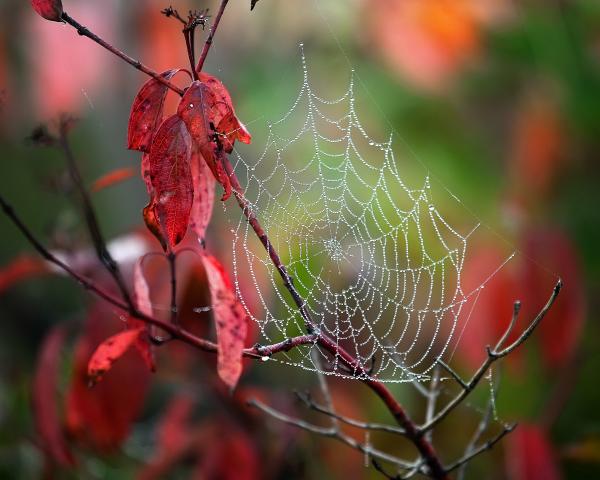
The likeness of those who take (false deities as) Auliya' (protectors, helpers) other than Allah is the likeness of a spider who builds (for itself) a house; but verily, the frailest (weakest) of houses is the spider's house - if they but knew.
( سورة العنكبوت , Al-Ankaboot, Chapter #29, Verse #41)


The Prophet sal Allahu alayhi wa'sallam said:

"The Muslim is a unique Ummah among the whole of mankind:
Their Land is ONE, their War is ONE, their Peace is ONE,
Their Honour is ONE and their Trust is ONE."
[Ahmad]

Thursday, 18 March 2010

- Advice of Sufyan Al-Thawri (rh)-

Bismillahir Rahmanir Rahim

In the name of Allah, the Most Beneficent, the Most Merciful


- Advice of Sufyan Al-Thawri (rh)-

Sufyân ath-Thawrî (rh) wrote to ’Abbâd ibn ’Abbâd al-Khawwâs al-Arsûfî (rh) saying:

To proceed: You are in a time which the Companions of the Prophet (SAW) used to seek refuge from reaching, and they had the knowledge that we do not have, and they had precedence which we do no. So how is it for us, when we reach that, having little knowledge, little patience, few helpers upon what is good, corruption of the people and pollution of this world?! So take to the original state of affairs and cling to it. I advise you to remain unknown, since this is the age for remaining anonymous (khumûl). And remain aloof and mix little with the people, since before, when the people met, they would benefit from each other. But today that has gone and your safety - in our view - lies in abandoning them.

Beware of the Rulers. Beware of coming near to them and of mixing with them in any of the affairs. Beware of being deceived, so that it is said to you: Intercede [for me], so that you help one oppressed, or repel an act of oppression - because that is from the deception of Iblîs, which the wicked reciters have taken as a means to attain a favorable position. It used to be said: Beware of the trial of the ignorant worshipper and the wicked scholar, because the trial of these two is indeed a trial for everyone put to trial.

If you find questions and need for fatwâ, then take take advantage of it - but do not compete desirously for it. And beware of being like the one who loves that his saying is acted upon, or that his saying is publicised or listened to, and if that is abandoned, the effects of that are seen upon him.

And beware of the love of leadership, since leadership may be more beloved to a man than gold and silver - but it is something difficult and obscure; and this will not be understood except by wise Scholars. So seek after your lost soul and work with correct intention and know that there has come near to the people a matter which a person would be desirous of death.


The Prophet sal Allahu alayhi wa'sallam said:

"The Muslim is a unique Ummah among the whole of mankind:
Their Land is ONE, their War is ONE, their Peace is ONE,
Their Honour is ONE and their Trust is ONE."
[Ahmad]

Monday, 15 March 2010

[Event] Imam Ghazalis(ra) Ihya Ulum al-Din (A Ba'biker & A Saad): 20-21 March 2010

Bismillahir Rahmanir Rahim

In the name of Allah, the Most Beneficent, the Most Merciful


Al Buruj Press Presents with SOAS Somali Society:

Imam Ghazali's 'Ihya Ulum al-Din':
"Evils of the World, Evils of Wealth and Miserliness & Poverty and Renunciation"


With Shaykh Ahmed Ba'biker and Shaykh Ahmed Sa'ad

"A COURSE NOT TO BE MISSED!!!"

Hasan Basri(ra) once wrote to Caliph Abdul Aziz : "O Commander of the Faithful, fear the world. Giving up the world means gathering provision from the world for the next world. He, who honours the world, is humiliated by it. He who hoards up for the world, is thrown into wants."

A 2-day intensive course going through 3 selected chapters of Imam Ghazali's The Revival of the Religions Sciences (Ihya ulum al-dīn), widely regarded as the greatest work of Muslim spirituality. This course focusing on 3 chapters on Evils of the World, Evils of Wealth and Miserliness and Poverty and Renunciation will provide excellent advices as demonstrated by Imam Ghazali(ra) in denouncing the various temptations of the world and focussing on the eternal life, the hereafter.

Join us for some excellent guidance from our course instructors, the esteemed Shaykh Ahmed Ba'biker and Shaykh Ahmed Sa'ad who have agreed to go through this work and provide in depth and expert knowledge that you may use to guide yourself in practising the methods of purification of your own.


Details are as follows:

Cost:
£30 includes course materials & refreshments


Date:
Saturday 20th March - Sunday 21st March 2010


Time:
10:00am to 7:00pm


Venue:

SOAS University (Kingscross Campus),
Vernon Square, Penton Rise, London WC1X 9EW

Lecture Room 111


(Nearest Stations are Kings Cross and Euston)

Email: alburujpress@gmail.com

Course Pre-requisites: None- Open to all


Ticket Details:

Brothers: 07983590489/ 07595510978

Sisters: 07984259698/ 07706324404

Online payment: www.alburujpress.com


Shaykh Ahmed Ba'biker (also known as Abu Bakr As-sudani), arrived in the UK in 1977 and since then he has been at the forefront of Daw'a in this country. He is currently the Imam of Yusuf Islam's Islamia School. He studied the Islamic Sciences in Sudan under Shaykh Fatih Qaribullah (rahimah-ullah) son of Sayyidi Shaykh Qaribullah (rahimah-ullah) son of the Great Shaykh Ahmed At-Tayyib (rahimah-ullah). He has certified Ijaza'at in various Islamic disciplines including Maliki Fiqh, Hadith, Aqeedah, Da'wah, Tajweed, Tasawwuf etc.

Shaykh Ahmed Mohamed Sa'ad, born into a family of scholars and Huffaz from Egypt. His late father and grandfather graduated from Al-Azhar and were scholars in north Egypt. He finished the memorization of the whole Quran at the age of ten and studied traditional Islamic sciences at the hands of his father and then started the studies at Al-Azhar until he graduated from Al-Azhar University with BA in Islamic studies.


The Prophet sal Allahu alayhi wa'sallam said:

"The Muslim is a unique Ummah among the whole of mankind:
Their Land is ONE, their War is ONE, their Peace is ONE,
Their Honour is ONE and their Trust is ONE."
[Ahmad]

Tuesday, 2 February 2010

Event [London] INTRODUCTION TO ISLAM IN BALKANS, Saturday 20th February 2010

Bismillahir Rahmanir Rahim
bismillah.gif
In the name of Allah, the Most Beneficent, the Most Merciful


Islamic Circles presents

INTRODUCTION TO ISLAM IN BALKANS

Date: Saturday 20th February 2010

Time: 10am - 5pm

Venue: Muslim World League, 46 Goodge Street, London, W1T 4LU


A one day introductory course focusing on Islam in the Balkans. Being
part of Europe and only two and a half hours by plane, the history,
traditions and experiences of this region are important for helping us
better understand the oldest indigenous Muslim communities in Europe
and the future of Muslims on this continent in general.

Topics to be covered include:

• Introduction to the Geography and Peoples of the Balkans
• The Balkans before the Arrival of Islam
• Muslim Communities in the Balkans (Bosnia, Albania, Bulgaria, Macedonia)
• Expansion of the Ottoman Empire into Europe
• Islamic Leadership Structure
• Trade, Military and Political Relations
• Da‘wah and Migration
• Architecture and Cultural Aspects
• Recent Conflicts in Bosnia (1992-1995) and Kosova (1998-2000)
• Islam Resurgence since the 1990s

The course instructors will be Senad Biber and Sehija Dedovic from Sarajevo.
This course is suitable for anyone with an interest in Islamic History, Muslims
in Europe, and related subjects.

All welcome and by bookings only

For bookings and further information please contact:
Tel: 07794 253 856 / 07956 983 609
E-mail: info@silkroutetours.co.uk


The Prophet sal Allahu alayhi wa'sallam said:

"The Muslim is a unique Ummah among the whole of mankind:
Their Land is ONE, their War is ONE, their Peace is ONE,
Their Honour is ONE and their Trust is ONE."
[Ahmad]

Tuesday, 19 January 2010

[Quraan Video] Surah Maryam: Salah Bukhatir

Bismillahir Rahmanir Rahim

In the name of Allah, the Most Beneficent, the Most Merciful


The Prophet sal Allahu alayhi wa'sallam said:

"The Muslim is a unique Ummah among the whole of mankind:
Their Land is ONE, their War is ONE, their Peace is ONE,
Their Honour is ONE and their Trust is ONE."
[Ahmad]

Saturday, 9 January 2010

Polishing the Hearts

Bismillahir Rahmanir Rahim

In the name of Allah, the Most Beneficent, the Most Merciful


Polishing the Hearts

Imaam ibn al-Qayyim al-Jawziyyah (d.751)

Al-Bayhaqee relates from Ibn 'Umar radiallaahu 'anhu that Allaah's Messenger sallallaahu 'alayhi wa sallam said: "For everything there is a polish, and the polish for the hearts is the dhikr (remembrance) of Allaah. There is nothing more potent in saving a person from the punishment of Allaah than the dhikr of Allaah." It was said: Not even Jihaad in the path of Allaah. So he replied: "Not even if you were to continue striking with your sword until it breaks."5

There is no doubt that hearts becomes rusty just as copper and silver coins become rusty. The polish for [this rust] is the dhikr of Allaah. This is because [dhikr] is like a polish [which polishes the heart] like a shiny mirror. When dhikr is left, the rust returns. But when dhikr resumes, then the heart is [again] polished. And hearts become rusty due to two things:- [i] neglecting remembering Allaah, and [ii] committing sins. The polish for these two things is:- [i] seeking Allaah's forgiveness and [ii] dhikr.


[CONFUSING TRUTH WITH FALSEHOOD]

Whoever neglects [remembering Allaah] most of the time, then his heart will become rusty in accordance with how neglectful the person is. And when this [filthy] rust accumulates on the heart, then it no longer recognises things as they really are. Thus, it views falsehood as if it is the truth, and truth as if it is falsehood. This is because this rust darkens and confuses the heart's perception, and so it is unable to truly recognise things for what they really are. So as the rust accumulates, the heart gets blackened, and as this happens the heart becomes stained with this filthy rust, and when this occurs it corrupts the heart's perception and recognition of things. The heart [then] does not accept the truth nor does it reject falsehood, and this is the greatest calamity that can strike the heart. Being neglectful [of dhikr] and following of whims and desires is a direct consequence of such a heart, which [further] extinguish the heart's light and blinds its vision. Allaah - the Most High - said:

"And do not obey him whose heart We have made to be neglectful of Our remembrance, one who follows his own whims and desires and whose affairs are furat [have gone beyond bounds and whose deeds have been lost]." [Soorah al-Kahf 18:28].


Allaah - the Most High - said:

"O you who believe! Remember Allaah and remember Him alot." [Soorah al-Ahzaab 33:41].


"Those men and women who remember Allaah alot." [Soorah al-Ahzaab 33:35].

"So when you have finished the rights of your Pilgrimage, then remember Allaah as you remember your fore-father, or with more intense remembrance." [Soorah al-Baqarah 2:200].


These verses contain a command to remember Allaah intensely and abundantly, since the worshipper is in dire need of [remembering Allaah] and cannot do without it even for a twinkling of an eye. This is because every moment that a person does not spend in the dhikr (remembrance) of Allaah will not be of any benefit to him. Rather, the harm entailed in being neglectful of the dhikr of Allaah is far greater than any benefits that can be gained. One of the 'aarifeen (those who are knowledgeable about Allaah) said: "lf a person were to spend such and such number of years engaged [in the dhikr of Allaah], then he turns away from it for just a moment, what he will lose is far greater than whatever he has already gained."


Al-Bayhaqee relates from 'Aaishah radiallaahu 'anhaa that the Prophet sallallaahu 'alayhi wa sallam said: "There is no time in which the son of Aadam does not remember Allaah in it, except that it will be a source of regret for him on the Day of Judgement."2


Mu'aadh ibn Jabal radiallaahu 'anhu relates that the Prophet sallallaahu 'alayhi wa sallam said: "The people of Paradise will not have any regrets except for those moments in which they were not engaged in the dhikr (remembrance) of Allaah."3


Mu'aadh ibn Jabal also relates that Allaah's Messenger sallallaahu 'alayhi wa sallam was asked: What action is the most beloved to Allaah? So he replied: "That you continue to keep your tongue moist with the dhikr of Allaah, until you die."4


[POLISHING THE HEART]
Abu Dardaa radiallaahu 'anhu said: "For everything there is a polish and the polish for the heart is the dhikr of Allaah."


[QUALITIES OF A GUIDE]

So when a worshipper desires to follow another person, then let him see: Is this person from the people of dhikr, or from the people who are negligent [about remembering Allaah]? Does this person judge in accordance with his whims and desires, or by the Revelation? So, if he judges by whims and desires then he is actually from those people who are negligent; those whose affairs have gone beyond bounds and whose deeds are lost.


The term furat [which occurs in the above verse] has been explained in many ways. It has been explained to mean:- [i] losing the rewards of that type of action which is essential to do, and in which lies success and happiness; [ii] exceeding the limits of something; [iii] being destroyed; and [iv] opposing the truth. Each of these sayings are very close in meaning to each other.


The point is that Allaah - the One free from all imperfections, the Most High - has prohibited following all those who possess such attributes. So it is absolutely essential that a person considers whether such attributes are found in his shaykh, or the person who's example he follows, or the person that he obeys. If they are, then he should distance himself from such a person. However, if it is found that the person is, in most cases, pre-occupied with the dhikr of Allaah and with following the Sunnah, and his affairs do not exceed the limits, but rather he is judicious and resolute in his affairs, then he should cling to him very firmly.


Indeed, there is no difference between the living and the dead, except with the dhikr of Allaah; since [the Prophet sallallaahu 'alayhi wa sallom] said: "The example of one who remembers Allaah and someone who does not, is like the example between the living and the dead."6


1. Al-Waabilus-Sayyib min Kalimit-Tayyib (pp.78-82).
2. Hasan: Related by Abu Nu'aym in al-Hiliyatul-Awliynaa (5/361-362). It was authenticated by Shaykh al-Albaanee in Saheehul-Jaami' (no.5720).
3. Saheeh: Related by Ibnus-Sunnee in 'Aml al-Yawma wal-Layna (no.3). Refer to Saheehul-Jaami' (no.5446).
4. Hasan: Related by Ibn Hibbaan (no.2318). It was authenticated by Shaykh Saleem al-Hilaalee in Saheeh al-Waabilus-Sayyib (p.80).
5. Saheeh: Related by Ahmad (4/352), from Mu'aadh ibn Jabal radiallaahu 'anhu. It was authenticated by al-Albaanee in Saheehul-Jaami' (no.5644).
6. Related by al-Bukhaaree (11/208) and Muslim (1/539).


Source


The Prophet sal Allahu alayhi wa'sallam said:

"The Muslim is a unique Ummah among the whole of mankind:
Their Land is ONE, their War is ONE, their Peace is ONE,
Their Honour is ONE and their Trust is ONE."
[Ahmad]

Monday, 14 December 2009

The Life of this World

Bismillahir Rahmanir Rahim

In the name of Allah, the Most Beneficent, the Most Merciful


The Life of this World

by Abu 'Abdir-Rahman Mohammad Navaid Aziz

____________________________________________________


Truly, we were granted this life to be tested which of us would remain steadfast in the dhikr (remembrance) and shukr (gratitude) of Allah, the Sublime. Living in a landmine where every step you take can lead to your possible destruction, and not destruction of the body but rather of the soul, we see people being annihilated every single day.


This world is one big attraction, making those who in reality are meagre and full of weakness look strong and mighty, making those who are ignorant seem intelligent, and portraying those who have been misguided and enslaved to their own desires as being the most guided of people.


Know, that no one lives in this dunya (world) except that he will be eaten by it in its entirety or will leave bruised and scarred except for those whom Allah, the Most High, has mercy upon. Hasan al-Basree, may Allah have mercy upon him, had some wise words concerning the dunya when he said:


"So beware of this land (the dunya) that is falling down and is misleading and deceiving, being decorated by its deceit and having eluded (others) by its delusion, and having killed its people with its hopes. It looks forward with anticipation towards the one who proposes to it for marriage. Hence it becomes like the unveiled bride - all the eyes are looking towards it, and the souls are in love with it, and the hearts are captivated by it." [Related by Abu Nu'aym in al-Hilyah (2/135-136)]


Indeed he was true in his words, as we are all guilty of the crime of being deceived by the dunya with its beauty and glamour. Some of us were fortunate to get out, praise be to Allah, while others have wandered off into the everlasting dark tunnel that had no light at its beginning and has no light at its end, and the only thing that will allow him to leave is death itself. Refuge is sought with Allah, the Most High, from such an evil ending.


And know for a fact that no matter how much good you may see in this dunya, in reality it is just a wolf dressed in sheep’s clothing. Had there been any good in it, then Allah, the Beneficent, would have made it a place of reward, and place of dissension of His mercy but rather Allah only sent one of His mercies upon the earth through which we are kind to one another, and rather He has made it a place of trial and tribulation and a true prison for the believer. Likewise, had there been good in it we would have seen the Prophet, peace be upon him, being attached to it and living in its luxuries but rather he sacrificed it all with full certainty in that which will come after is better and everlasting. Thus, he said:


"The dunya is cursed. Cursed is all that is in it except for the remembrance of Allah, and that which resembles it, a scholar, and a student (of knowledge)." [Related by Tirmidhee, Ibn Maajah, and Bayhaqi. The wording is taken from Shaykh al-Albaanee's Sahîh at-Targhîb wat-Tarhîb (1/34)]


So do we need anymore proof that this dunya is an endless pit for the one who is not careful and falls into it?

One of the most beautiful words ever uttered were at the end of a sîrah lecture (a lecture of the Prophet's life) where the speaker said referring to the Prophet, peace be upon him:


"He had the world at his feet, yet not a dinâr to his name."


Indeed that’s what true zuhd (asceticism) and taqwâ (piety) is, having the dunya bestowed upon you from every angle imaginable and sacrificing it for the noble face of your Creator and Sustainer. Truly a noble attribute that most have lost, except those who have been encompassed by the Mercy of Allah. So let us abandon this dunya and its temporary beauty for the joys which will last for eternity. Let us be the children of the âkhirah (hereafter) and not of the dunya as 'Ali, may Allah be pleased with him, said:


"Verily the dunya is coming to an end, and the âkhirah is coming to a beginning and they both have children. So be children of the âkhirah and don’t be children of the dunya. For verily today there is action with no account and tomorrow there’s account with no action." [Related by Ibn al-Qayyim in ad-Dâ' wad-Dawâ Fasl 15]


So let us wear the garments of imân (faith) and taqwâ (piety) as they are the only true garments the cover the 'awrah, and are the only protection from the tribulations of the dunya. Like Allah, the Most High, said:


"And take provision, verily the best of provisions is at-taqwâ." [Al-Qur'ân 2:197]


And as He says:

"Verily for the muttaqîn (people of taqwâ) is success (i.e. Paradise)." [Al-Qur'ân 78:31]


And as He says:

"Indeed successful are the believers." [Al-Qur'ân 23:1]


And as He, the Most High, says:

"Verily those who believe and do righteous deeds will have the gardens of al-firdaus (the loftiest form of paradise)." [Al-Qur'ân 18:107]


May Allah make us of these people - Âmîn.


Lastly, before I end off, I leave you with the words of the Prophet, peace be upon him:

"Every man starts his day being a vendor of his soul, either freeing it or bringing about its ruin."


He who enslaves his soul to Allah has indeed liberated it and he who enslaves his soul to his whims and desires then let him prepare for a marriage to captivity till death do you part. Proving this point is the statement of the 'Allâmah of raqâ'iq (heart softening traditions) Ibn al-Qayyim, may Allah have mercy upon him:

"Verily the life of man is in the life of his heart and his soul. And there is no life in the heart except by knowing its creator, having love for him, worshipping him solely, turning to him in times of need, and seeking tranquillity with His remembrance. And he who loses this life has lost all good. Even if he attempts to substitute (this loss) with all that is in the world. For verily not even all of the world together would be able to replace this life. And verily for everything that a slave loses there is a substitute, but the one who loses Allah will never find anything to replace Him." [Related by Ibn al-Qayyim in ad-Dâ' wad-Dawâ Fasl 49]


So take these two sayings, read them, understand them, and implement them to the best of your ability, and know, without a doubt, that Allah is the one who grants success.


- The statement of Fudayl bin 'Iyyaad: "Man's fear of Allah is equal to his knowledge of Him and his renunciation of worldly pleasures is equal to his desire in the Hereafter."


- Secondly, the advice of Sufyan ath-Thawree: "Work for the sake of this life within the extent of your stay in it, and for the Hereafter within the extent of your stay therein."

[Both quotes are related in Abdul-Malik al-Qaasim's Life is a Fading Shadow, (Dar-us-Salam)]


And Allah knows best.


May Allah make us of those people who benefit from admonition and of those who when they are given are thankful, when tested are patient, and when sin are repenting (as these are the keys to success in this dunya and the âkhirah) - Âmîn.

Completed on the 3rd day of Safar 1424H
By the Slave of Allah, the one most in need of His mercy
Abu 'Abdir Rahman Mohammad Navaid Aziz
From the Holy City of al-Madînah


The Prophet sal Allahu alayhi wa'sallam said:

"The Muslim is a unique Ummah among the whole of mankind:
Their Land is ONE, their War is ONE, their Peace is ONE,
Their Honour is ONE and their Trust is ONE."
[Ahmad]

Tuesday, 8 December 2009

Allaah is Beautiful and Loves Beauty

Bismillahir Rahmanir Rahim

In the name of Allah, the Most Beneficent, the Most Merciful


Allaah is Beautiful and Loves Beauty
Imaam ibn al-Qayyim al-Jawziyyah rahimahullaah

From ’Abdullaah Ibn Mas’ood radiallaahu ’anhu who said that the Prophet sallallaahu ’alayhi wa sallam said, “No one will enter Paradise who has an atom’s weight of pride in his heart.” A man said, “What if a man likes his clothes to look good and his shoes to look good?” He said, “Allaah is beautiful and loves beauty. Pride means denying the truth and looking down on people.” [1]

Ibnul-Qayyim (d.751H) radiallaahu ’anhu said, commenting upon this hadeeth:

‘‘The phrase ‘Allaah is beautiful and loves beauty,’ includes the beautiful clothing which was asked about in the same hadeeth. It is included by way of generalization, meaning that beauty in all things is what is meant here. In Saheeh Muslim, it says: “Allaah is good and only accepts that which is good.” [2]

In Sunanut-Tirmidhee it says: “Allaah loves to see the effects of His blessing on His slave.’’ [3] It was reported that Abul-Ahwas al-Jashamee said: The Prophet sallallaahu ’alayhi wa sallam saw me wearing old, tattered clothes, and asked me, “Do you have any wealth?” I said, “Yes.” He said, “What kind of wealth?” I said, “All that Allaah has given me of camels and sheep.” He said, “Then show the generous blessings that He has given you.” [4]

Allaah, may He be glorified, loves the effects of His blessings to His slave to be made manifest, for this is part of the beauty that He loves, and that is part of the gratitude for His blessings which forms an inner beauty (beauty of character). Allaah loves to see the external beauty of His slaves which reflects His blessings on them, and the inner beauty of their gratitude to Him for those blessings. Because He loves beauty, He sends down on His slaves clothes and adornments with which they may make their outward appearance beautiful and He gives them taqwaa which makes their inner characters beautiful. Allaah says:

“O Children of Adam! We have bestowed raiment upon you to cover yourselves (screen your private parts, etc.) and as an adornment, and the raiment of righteousness, that is better.” [Sooratul-A’raaf 7:26]

And He says, speaking of the people of Paradise:

“…and He gave them Nadrataan (a light of beauty) and joy. And their recompense shall be Paradise and silken garments, because they were patient.” [Sooratul-Insaan 76:11-12]

Their faces will be made beautiful with the nadrah (light of beauty), their innermost being with joy and their bodies with silken garments. Just as Allaah loves beauty in words, deeds, garments and outward appearance, so He hates ugliness in words, deeds, garments and outward appearance. He hates ugliness and its people, and loves beauty and its people. But two groups are misguided with regard to this issue: a group who say that everything that He has created is beautiful, so He loves all that He has created and we should love all that He has created and not hate anything. They say: whoever realizes that all that exists comes from Him will see that it is beautiful … these people have no sense of jealousy for the sake of Allaah or hatred and enmity for the sake of Allaah, or denouncing what is evil (munkar), or jihaad (struggle) for the sake of Allaah, or adhering His limits. They regard the beauty of images, male or female, as being part of the beauty that Allaah loves, and seek to worship Allaah through immoral acts. Some of them may even go so far as to claim that the One Whom they worship is manifested or incarnated in those images.

The second group, on the other hand, say that Allaah condemns the beauty of images, forms and outward appearances. Allaah says about the munaafiqoon (hypocrites):

“And when you look at them, their bodies please you…” [Sooratul-Munaafiqoon 63:4]

“And how many a generation have We destroyed before them. Who were better in wealth, goods and outward appearance?” [Soorah Maryam 19:54]

In Saheeh Muslim it is reported that the Prophet sallallaahu ’alayhi wa sallam said: “Allaah does not look at your outward appearance and your wealth, rather He looks at your hearts and deeds.” [5]

According to another hadeeth: “Shabbiness is part of faith.” [6] Allaah condemns those who are extravagant, which applies to extravagance in clothing as well as in food and drink.

In order to settle this dispute, we may say that beauty in clothing and outward appearance is of three types, one of which is commendable, one is blameworthy and one of which is neither. The kind of beauty which is to be commended is that which is done for the sake of Allaah, to help one to obey Allaah and fulfill His commands, such as when the Prophet sallallaahu ’alayhi wa sallam made himself look beautiful (i.e. handsome) when meeting the delegations that came to him. This is like wearing armour or battle-dress when fighting, or wearing silk and showing off (in front of the enemy). This is commendable because it is done to make the word of Allaah supreme and to support His religion and annoy His enemies. The blameworthy kind of beauty is that which is done for the sake of this world, for reasons of power, false pride and showing off, or to fulfill some (selfish) desires. This also includes cases where beauty is an end in itself for a person and is all he cares about. Many people have no other concern in life. As for the kind of beauty which is neither commendable nor blameworthy, it is that which has nothing to do with either of the two purposes mentioned above (i.e., it is neither for the sake of Allaah nor for the sake of worldly purposes).

The hadeeth under discussion refers to two important principles, knowledge and behaviour. Allaah is to be acknowledged for beauty that bears no resemblance to anything else, and He is to be worshipped by means of the beauty which He loves in words, deeds and attitudes. He loves His slaves to beautify their tongues with the truth, to beautify their hearts with sincere devotion (ikhlaas), love, repentance and trust in Him, to beautify their faculties with obedience, and to beautify their bodies by showing His blessings upon them in their clothing and by keeping them pure and free of any filth, dirt or impurity, by removing the hairs which should be removed, by circumcision, and by clipping the nails. Thus they recognize Allaah through these qualities of beauty and seek to draw close to Him through beautiful words, deeds and attitudes. They acknowledge Him for the beauty which is His attribute and they worship Him through the beauty which He has prescribed and His religion. The hadeeth combines these two principles of knowledge and behaviour.’’ [7]


Footnotes:

[1] Related by Muslim (no. 131)
[2] Related by Muslim (no. 1686)
[3] Hasan Saheeh: Related by at-Tirmidhee (no. 2963), who said it was hasan saheeh.
[4] Saheeh: Related by Ahmad (no. 15323), at-Tirmidhee (no. 1929) and an-Nisaa‘ee (no. 5128)
[5] Related by Muslim (no. 1356)
[6] Saheeh: Related by Ibn Maajah (no. 4108), Aboo Dawood (no. 3630)
[7] al-Fawaa‘id (1/185)


SunnahOnline


The Prophet sal Allahu alayhi wa'sallam said:

"The Muslim is a unique Ummah among the whole of mankind:
Their Land is ONE, their War is ONE, their Peace is ONE,
Their Honour is ONE and their Trust is ONE."
[Ahmad]

Friday, 27 November 2009

Eidul Adha 1430

Bismillahir Rahmanir Rahim

In the name of Allah, the Most Beneficent, the Most Merciful


TaqabbalAllâhu minnâ wa minkum


The Prophet sal Allahu alayhi wa'sallam said:

"The Muslim is a unique Ummah among the whole of mankind:
Their Land is ONE, their War is ONE, their Peace is ONE,
Their Honour is ONE and their Trust is ONE."
[Ahmad]

Wednesday, 18 November 2009

Salatul tahajjud (late-night prayer) during one of its nights is like performing the late night prayer on the night of power

Bismillahir Rahmanir Rahim

In the name of Allah, the Most Beneficent, the Most Merciful


Abu Hurairah relates that the Messenger of Allaah (sallallaahu 'alaihi wa sallam) said,

"There are no days more loved to Allaah for you to worship Him therein than the ten days of Dhul Hijja. Fasting any day during it is equivalent to fasting one year and to offer salatul tahajjud (late-night prayer) during one of its nights is like performing the late night prayer on the night of power. [i.e., Lailatul Qadr]."

[This is related by at-Tirmidhi, Ibn Majah, and al-Baihaqi]


The Prophet sal Allahu alayhi wa'sallam said:

"The Muslim is a unique Ummah among the whole of mankind:
Their Land is ONE, their War is ONE, their Peace is ONE,
Their Honour is ONE and their Trust is ONE."
[Ahmad]

Thursday, 12 November 2009

The Best Days in the World

Bismillahir Rahmanir Rahim

In the name of Allah, the Most Beneficent, the Most Merciful

The Best Days in the World

Based on "Al-A`yaad fil Islaam" [by Muhammad. al-Jibaly]
© QSS


The Blessed Days of Dhul Hijjah

In what follows, we will highlight some of the Sunnah regarding these days, hoping by this to provide an incentive to make the best out of them and gain Allaah’s reward, in shaa’ Allaah.

The First Ten Days of Dhul-Hijjah

"The best days in the world are the Ten days." [Ibn Hibbaan, al-Bazzaar, authenticated in Saheeh Jaami` us-Sagheer #1133]

"There are no days during which good deeds are more beloved by Allaah than these (ten) days." [al-Bukhaaree, at-Tirmidhee and others] The Prophet, sallallaahu `alayhi wa sallam, was then asked: "Not even Jihaad in Allaah’s way?" He replied: "Not even Jihaad in Allaah’s way; except for a person who went out (for Jihaad) with his self and wealth and came back with none (i.e. lost all for Allaah)." [at-Tirmidhee, authenticated in al-Albaanee’s Irwaa’ ul-Ghaleel, #953]

All good deeds can be done during these days and the early generations of Muslims used to exert themselves excessively in worshipping Allaah. In particular, fasting and dhikr (mentioning and remembering Allaah) are to be done in plenty on these days.

Dhikr

Ibn `Abbaas commented on the verse <<…and to mention Allaah’s name [plentifully] on Known days>> [22:28] by saying: <…these known days are the ten days [of Dhul Hijjah].> [Tafseer ibn Katheer]

Fasting

One of the wives of the Prophet, sallallaahu `alayhi wa sallam, said: "Allaah’s Messenger used to fast the (first) nine days of Dhul Hijjah, the day of `Ashooraa’, and three days of each month. [Saheeh Sunan Abee Daawood #2129]

Fasting on all these days, however, is not a waajib (compulsory), nor is it a constant sunnah that the Messenger, sallallaahu `alayhi wa sallam, never dropped. `Aa’ishah said: "I never saw the Messenger, sallallaahu `alayhi wa sallam, fast the ten days." [Muslim]

The Day of `Arafah - The Best Day of the Whole Year

The day of `Arafah is the day when the pilgrims stand in worship on the Mountain of `Arafah.

"Fasting the day of `Arafah expiates the [minor] sins of two years: a past one and a coming one. And fasting the day of `Aashooraa’ expiates the sins of the past year." [Muslim]

"There is no day on which Allaah `azza wa jall frees people from the Fire as He does no the day of `Arafah. He comes close (to those standing on `Arafah) and then revels before His angels, saying: "What are these people seeking?" [Muslim]

The Day of al-`Ad-haa

The tenth of Dhul-Hijjah is `Eed ul- Ad-haa or the day of an-Nahr (slaughtering). It marks the conclusion of the major rites of Hajj, and commemorates Allaah’s bounty on His Messenger Ibraaheem, when He gave him a ram to sacrifice as ransom for his son Ismaa`eel, `alayhimassalaam.

"The day of al-Fitr [i.e. `Eed ul-Fitr], the day of an-Nahr, and the days of Tashreeq are `Eed days for us Muslims. They are days of eating and drinking." [Ahmad, an-Nasaa’ee, Saheeh ul-Jaami` #8192]

The Three Days Following `Eed ul-`Ad-haa

On these days, the pilgrims complete their rites, Muslims continue with their `Eed celebrations, and are prohibited to fast. "The days of tashreeq are days of eating, drinking and mentioning Allaah." [Muslim]

The Sacrifice

Allaah `azza wa jall mentioned the sacrifice together with the first and foremost worship in Islaam: prayer. This is a clear indication of its great importance. Thus He ordered His Messenger, sallallaahu `alayhi wa sallam, to slaughter sacrifices by saying: <<…Pray unto your Lord and slaughter [your sacrifice]…" [109:2]

Ruling

The general consensus of the Muslim scholars is that the sacrifice is an important sunnah, and a worship called for in the Law of Allaah. However, they differ as to whether it is nafl (voluntary) or waajib (mandatory) for those who can afford it. Some scholars have explained the different ahaadeeth on the subject by stating that the sacrifice is obligatory on those who can afford it and not obligatory on those who cannot.

Abu Hurayrah reported that the Messenger, sallallaahu `alayhi wa sallam, said: "He who has the capacity, and does not sacrifice, may not approach our musallaa (place of prayer - on the `Eed)." [Ibn Maajah, Ahmad and others, authenticated by Al-Albaanee in Saheeh Sunan Ibn Maajah, #2533]

Regarding this hadeeth, Imaam ash-Shaukaanee said: "Prohibiting the one who could afford to sacrifice, but did not do so, from approaching the musallaa indicates that he must have left off a waajib, as it becomes useless to offer the salaah without this waajib [obligation]." [Nayl ul-Awtaar]

Avoid Cutting Hair or Nails

The one who plans to sacrifice (normally, the head of household) is prohibited to cut his hair or nails from the first Dhul Hijjah until he offers the sacrifice. "For the one who has a slaughtering to perform (on `Eed then, once the hilaal (crescent) of Dhul Hijjah is observed, let him not cut any of his hair or nails until he sacrifices." And in another narration: "Once the ten days start, for those of you who havethe intention to sacrifice, let them not cut any of their hair or nails (until they sacrifice)." [Muslim] This prohibition is the opinion of the majority of the scholars of the early generations of Muslims.

Allaahu A`lam

Our last call is all praise is to Allaah and may His salaah and salaam be upon our Prophet Muhammad and his family.


Islaam.com


The Prophet sal Allahu alayhi wa'sallam said:

"The Muslim is a unique Ummah among the whole of mankind:
Their Land is ONE, their War is ONE, their Peace is ONE,
Their Honour is ONE and their Trust is ONE."
[Ahmad]

Friday, 30 October 2009

Hajj Courses 2009

Bismillahir Rahmanir Rahim

In the name of Allah, the Most Beneficent, the Most Merciful


Hajj Taleem sessions will be taking place at the East London Mosque for those who will be going on Hajj this year.

There will be sessions in English and Bengali:


Bengali

31 October & 1 November 2009
After Maghrib
Mosque basement
Shaykh Abdul Qayum

English

7th November 2009
After Maghrib
LMC 1st Floor
Ustadh Abu Ahmad

-------

Fiqh of Hajj & Umrah

Ebrahim Community College

We often try to learn about hajj and umrah from talks in the masjid: no notes, no resources and thus no real learning. Learn all about the rules and practical ins and outs of performing Hajj and Umrah in a structured course, the sacred pilgrimage carried out by the Prophet Ibrahim AS and taught to us by our beloved Prophet Muhammad SAW. The course will cover every aspect of Hajj and Umrah equipping every participant with the technical and practical knowledge to be able to deal with all of the various situations one will encounter when performing hajj. Learn to avoid common pitfalls and find out ways in which you can maximise the use of your time whilst you are visiting the House of Allah SWT. The teacher will be an expert on the theory of Hajj and Umrah as well as someone who has undertaken the journey and thus will be about to inform you of the many modern day issues that are likely to affect you when you make your journey and whilst you stay in Saudi Arabia. You will also be given plenty of advice on clever ways in which you can make your hajj journey as hassle free as possible and avoid practical difficulties. The course will cover the rules of Hajj, Umrah, and Ziyarah of Madinah and the grave of our beloved Prophet Muhammad SAW.


Teacher: Sheikh Muhammad Bilal Abdullah


Who is it for?
Anyone, no entry requirement.


What can I progress to? This course is part of a complete programme which covers the fiqh of worship, starting with the Fiqh of Taharah and Salah, followed by a course on the Fiqh of Sawm and Zakah, and then there is this course on Hajj and Umrah. These courses can be studied in any order and form part of our ISP1 (Alim Course level 1) curriculum. At level 2 students study the Fiqh of Marriage and Divorce, the Fiqh of Transactions, Halal and Haraam, inheritance etc.


Next Start Date: Sunday 01 Nov 09,

Schedule: From 10am to 5pm

Fees: £15

Discounts: £5 off for everyone if registered and paid by 28th October. So you only pay £10.


(All fees are used to further Islamic education and other charitable causes)

How to apply ...


The Prophet sal Allahu alayhi wa'sallam said:

"The Muslim is a unique Ummah among the whole of mankind:
Their Land is ONE, their War is ONE, their Peace is ONE,
Their Honour is ONE and their Trust is ONE."
[Ahmad]